






















Length of Litigation

The length of any litigation will vary based on a number of factors. Sometimes litigation is very quick, with a new settlement offer immediately after the lawsuit is filed. Other times, the case may not be settled and the process could take anywhere from a few months if the case is resolved in arbitration to a year or more to finally go to a jury trial. Either way, we will be at your side throughout the entire process.

First Steps

When we file a lawsuit on your behalf, we will receive a case code number and a schedule from the court. This schedule lays out all of the important deadlines and hearing dates for your case, including your trial. After the lawsuit is filed, the defendant is officially served with the suit, and has a limited number of days to formally respond.

Background media
Rick Park and Angel Chenaur in suits outside

Arbitration or Trial?

Depending on the circumstances of your case, it will either proceed to trial before a judge and jury, or to arbitration. Arbitration is a quicker and less expensive way to resolve disputes. Rather than a normal judge, a retired judge or attorney typically oversees the case. We typically avoid arbitration when your damages exceed $100,000, because that is the maximum amount that can be awarded in an arbitration proceeding. Sometimes, due to either the language of your insurance policy or the preference of both parties, a case will proceed to arbitration rather than the public court system. More information on arbitration is available here. Your case may also go into mediation. More information about that process is available here.

Discovery

Before the trial or arbitration officially begins, there is a process of evidence collection called discovery. During this process, both sides will collect evidence, witness statements, etc. Discovery helps both sides to narrow down the disputed facts in the case and set up their arguments for trial.

tall glass building reflecting the sky on the windows

Interrogatories

During the discovery process, you will likely be asked to answer a series of interrogatories, or questions posed by the opposing attorney in writing. For the most part, these will be simple questions about the nature of what happened to you, your pain level, symptoms, among other issues. It is vitally important that these questions are answered truthfully.

Typically, the vast majority of the questions are easy for us to answer based on the information you have already provided us. We will fill out responses to each of the questions and note any areas where we need more information from you. Once we feel that we have sufficient answers to all of the questions, we will ask that you sign to verify that they are true. For an example of an interrogatory, click here.

Banner media

Depositions

Interrogatories are often given early on in the process to prepare for a deposition. A deposition is an oral interview, usually conducted at a law office, with a court reporter present for transcription. The defense attorneys will question you, attempting to nail down your story and catch any contradictions. For more information on depositions and how to prepare for one, click here.

Attorney media

Defense Medical Examination

If a case proceeds toward trial, the defendant will likely ask for a medical examination so that they can confirm (and question) your injuries. More information about these examinations is available by clicking here.

Logo media

Experts

Depending on the nature of your case, we may hire experts to testify at trial. These may include medical experts who can speak to your injuries, accident reconstruction experts to help determine fault, and economists to calculate your lost wages.

Trial

Your case may settle long before trial. However, if your case does go to trial, you can be assured that your case is in good hands. Our litigation staff has a strong track record of winning difficult cases, as well as negotiating powerful settlements on the eve of trial. More information on the trial process is available here.

Background media
Attorneys helping a client
Arbitration

Arbitration

Arbitration is designed to be a quicker, informal and less expensive way to resolve disputes.

Attorneys helping a client
Depositions

Depositions

For your case, you may be required to give an oral deposition. This guide will help you understand what a deposition is, why it matters, how to prepare, and most importantly, why it is vitally important that you tell the truth.

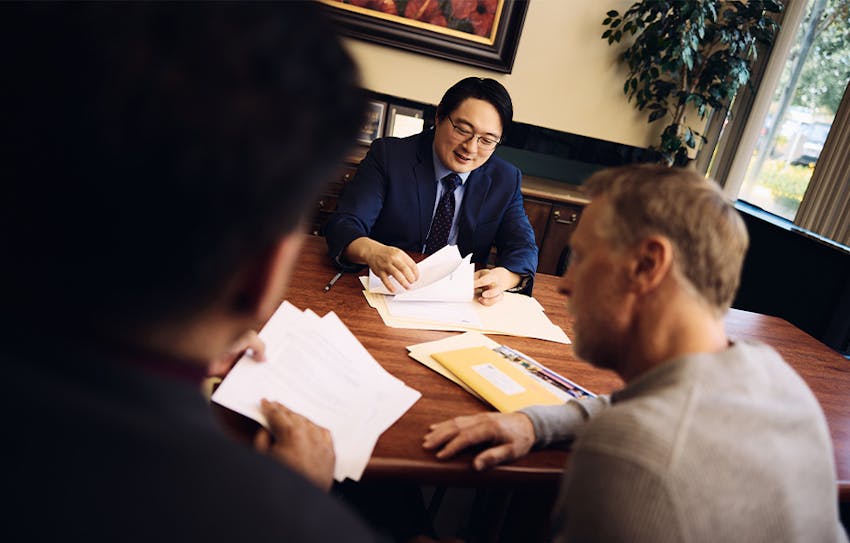
Rick and Angel sitting with client
Experts

Experts

Depending on the nature of your case, we may hire experts to testify at trial. These may include medical experts who can speak to your injuries, accident reconstruction experts to help determine fault, and economists to calculate your lost wages.

Attorneys working with client
Interrogatories

Interrogatories

During the discovery process, you will likely be asked to answer a series of interrogatories or questions posed by the opposing attorney in writing. 

attorneys at tables together
Mediation

Mediation

Mediation is a negotiation involving the use of a neutral intermediary. Mediation is voluntary. 

attorney smiling at table
Minor Settlements

Minor Settlements

When a minor child’s case is settled with an insurance company, special court rules apply to protect the best interests of the minor child.

Angel in white shirt smiling
Trial

Trial

If you choose to go to trial, and your case is not eligible for arbitration, the process will begin with the filing of a lawsuit, followed by a discovery process, and ultimately, a trial date.

Contact us media
Logo media

$100,000,000 Total Settlements

Banner media

Client Reviews

Logo media
Accessibility: If you are vision-impaired or have some other impairment covered by the Americans with Disabilities Act or a similar law, and you wish to discuss potential accommodations related to using this website, please contact our Accessibility Manager at (253) 766-5574.
Contact Us