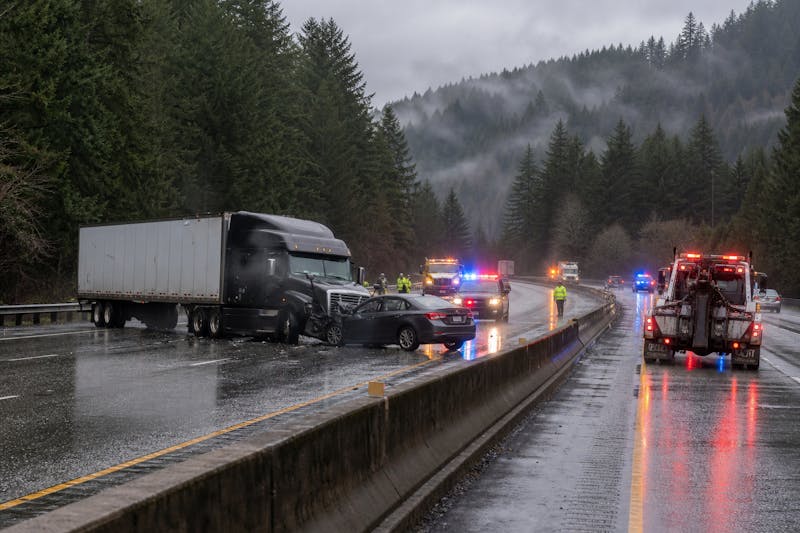
If you were hurt in a head-on or crossover crash on Highway 18 (State Route 18) in Washington, you usually have three years to file a personal injury lawsuit, and the at-fault driver, a trucking company, or even the State of Washington can be on the hook depending on what caused the wreck. SR 18 runs about 28 miles from Interstate 5 in Federal Way east to Interstate 90 near Snoqualmie and North Bend, and parts of it stay narrow and undivided as the road climbs over Tiger Mountain. That design is why this corridor has a long record of cars and trucks drifting across the center line into oncoming traffic.
This post explains why crossover crashes keep happening on SR 18, who can be held liable (the other driver, a freight carrier, and in roadway-defect cases the State itself), and the Washington deadlines and fault rules that decide what you can recover. Park Chenaur Injury Lawyers handles these cases from our Federal Way office and our Tacoma office, both within minutes of the SR 18 corridor. If you want your specific crash reviewed, contact our team for a free consultation.
Why Highway 18 Produces So Many Head-On and Crossover Crashes
State Route 18 is a roughly 28-mile state highway. Its western end is the interchange with I-5 and SR 99 in Federal Way, and its eastern end is the interchange with I-90 near Snoqualmie and North Bend. To be clear, SR 18 meets I-90 down in the valley near Snoqualmie. It does not run over Snoqualmie Pass, which is a separate stretch of I-90 farther east.
Much of the highway through Auburn, Covington, and Maple Valley is a divided four-lane road, but as SR 18 climbs over Tiger Mountain toward I-90 it narrows, and sections of it have operated for decades as a two-lane road with no physical barrier separating opposing traffic.
That layout is the core problem. On an undivided two-lane highway, a single mistake (a fatigued driver, a distracted driver, an impaired driver, or a heavy truck losing control on the grade) can put a vehicle directly into the path of oncoming traffic.
The Washington State Department of Transportation (WSDOT) has documented the results on the Tiger Mountain corridor between Issaquah-Hobart Road and Deep Creek:
-
WSDOT counted more than 400 collisions involving 740 vehicles, with six fatalities and more than 170 people injured.
-
A closer study of crashes from 2014 through 2019 found that 48 percent of them happened near the Tiger Mountain summit trailhead.
-
WSDOT cites those numbers as the reason it is widening the road to four lanes with a median barrier.
Common Factors in SR 18 Crossover Wrecks Include:
-
Undivided two-lane segments where nothing physical stops a vehicle from crossing into oncoming traffic.
-
The Tiger Mountain grade and curves, where speed, weather, and worn brakes contribute to loss of control.
-
Heavy freight traffic using SR 18 as a connector between I-5 and I-90, mixing large trucks with passenger cars on narrow lanes.
-
Driver fatigue and impairment, including early-morning crashes when traffic is light and speeds are high.
-
Sudden congestion and merge points near the I-90 interchange that force traffic into single lanes.
What WSDOT is Doing About SR 18 (And Why It Matters to Your Case)
Washington has been rebuilding SR 18 in phases to fix the exact defect that drives these crashes: the lack of a divided roadway with a median barrier.
-
The Eastern End: WSDOT's I-90/SR 18 interchange project widened more than two miles of SR 18 from two lanes to four (two in each direction) between I-90 and Deep Creek, installed a permanent center barrier between the eastbound and westbound lanes, and replaced the old interchange with a diverging diamond design. WSDOT states the diverging diamond cuts the number of vehicle conflict points from 26 to 14, which reduces the opportunity for collisions by about 50 percent. This roughly $188 million project opened its new interchange in July 2025, with the SR 18 widening expected to finish in late summer 2026.
-
The Tiger Mountain Stretch: A separate, larger project will widen the remaining two-lane stretch over Tiger Mountain. WSDOT's SR 18 Issaquah-Hobart Road to Deep Creek widening project, funded with about $665.9 million from the Move Ahead Washington transportation package, will add a second lane in each direction and a median barrier from near milepost 21 east to Deep Creek near milepost 26, covering the summit. WSDOT lists construction beginning around summer 2030, which means significant portions of SR 18 will remain undivided and barrier-free for years.
Why does the project status matter to an injured person? Because the timeline tells you which crashes happened on a known, documented hazard that the State had not yet fixed. When a crossover crash occurs on a segment WSDOT itself flagged as dangerous and slated for a median barrier, roadway design can become part of the liability picture alongside the at-fault driver.
Who Can Be Held Liable for a Highway 18 Crash
Most SR 18 cases start with the at-fault driver, but the strongest claims often reach beyond that one person. The parties who may share responsibility include:
-
The other driver: Crossing the center line, speeding for conditions, distraction, drowsy driving, and impairment are the usual causes of a head-on. A driver who drifts into oncoming traffic is generally negligent as a matter of basic traffic law.
-
A trucking or freight company: SR 18 is a heavily used truck connector between I-5 and I-90. When a commercial truck is involved, the motor carrier can be liable for its driver's conduct and for its own negligence in hiring, training, supervision, maintenance, and hours-of-service compliance. Interstate carriers are regulated by the Federal Motor Carrier Safety Administration, and FMCSA rules on driver qualification and hours of service often supply the standard of care. Truck cases also tend to involve higher insurance limits, which matters when injuries are catastrophic.
-
The State of Washington: When a roadway defect (an unsafe design, a missing median barrier on a documented crossover-crash corridor, inadequate signage, or poor maintenance) contributes to a crash, the State that owns and maintains SR 18 can be a defendant. These claims are difficult and carry strict procedural rules, but on a highway WSDOT has publicly identified as a high-collision corridor awaiting a barrier, roadway design deserves a hard look.
-
A vehicle or parts manufacturer: If brakes, tires, steering, or other components failed on the grade, a product liability claim may apply.
Sorting out who is liable requires fast evidence preservation: the collision report, scene measurements, vehicle data recorders, truck driver logs and electronic logging device data, and WSDOT records for that segment. Our car accident team and truck team work these claims together because SR 18 wrecks frequently involve both passenger vehicles and freight.
Suing the State of Washington for a Roadway-Defect Claim on SR 18
A claim against the State is not like a claim against a private driver. Washington has waived its sovereign immunity for tort claims, but only if you follow a specific procedure, and the deadlines are unforgiving.
Under RCW 4.92.100, you must first file a standard tort claim form with the Washington Office of Risk Management before you can sue the State. The form has to describe the conduct, the injury, the time and place, and the damages claimed. The statute says it must be liberally construed so that substantial compliance is enough, but the filing itself is mandatory.
Then, RCW 4.92.110 imposes a waiting period: you cannot file the lawsuit until 60 calendar days have passed after you present the claim. The one piece of good news in that rule is that the statute of limitations is tolled (paused) during that 60-day window, so the waiting period does not eat into your three-year deadline.
Miss the claim-filing step, though, and a roadway-defect case against the State can be dismissed before it ever reaches the merits. This is the single most common way good State-liability claims die, which is why these cases should go to a lawyer quickly.
Washington Fault and Deadline Rules That Decide Your Recovery
Two Washington rules shape almost every SR 18 injury case.
The Three-Year Deadline
Under RCW 4.16.080, an action for injury to a person must be commenced within three years. That clock generally runs from the crash date. Wait too long and the claim is barred, no matter how clear the other driver's fault was. State-liability claims add the separate claim-filing and 60-day steps described above, so the practical window to act is shorter than three years.
Pure Comparative Negligence
Washington follows pure comparative fault under RCW 4.22.005. Your own share of fault reduces your recovery proportionally, but it never bars it.
For example, if a jury values your damages at $400,000 and assigns you 20 percent of the fault (such as for your own speed on the grade), you recover $320,000. Even a plaintiff found mostly at fault can still recover the remaining percentage.
Insurance adjusters use comparative fault as their main lever to cut offers on crossover crashes, often arguing the injured driver could have avoided the head-on. Strong scene evidence, vehicle data, and accident reconstruction are what answer that argument.
For wrongful-death crossover crashes, which SR 18 has produced repeatedly, the estate and statutory beneficiaries may bring a claim through our wrongful death practice. For a sense of how Washington injury cases are valued, see our overview of the average truck accident settlement in Washington.
What to Do After a Crash on Highway 18
The corridor's geography (rural grade, long closures, and limited cell coverage in spots) makes early steps especially important.
-
Call 911 and get the Washington State Patrol report. SR 18 is patrolled by WSP, and the trooper's collision report is the backbone of a center-line case.
-
Document the exact location. Note the milepost, the direction of travel, and whether the segment was divided or undivided. On SR 18, that detail is central to a roadway-design analysis.
-
Identify any commercial vehicles. Photograph the truck, trailer, and DOT number. Carrier identity drives both liability and available insurance.
-
Get medical care immediately. Head-on and crossover impacts produce serious injuries even when adrenaline masks them at the scene. Gaps in treatment are used against you later.
-
Do not give a recorded statement to the other driver's insurer before talking to a lawyer.
-
Preserve evidence quickly. Truck logs, electronic data, and skid evidence disappear. If the State may be involved, the RCW 4.92.100 claim-filing clock is already running.
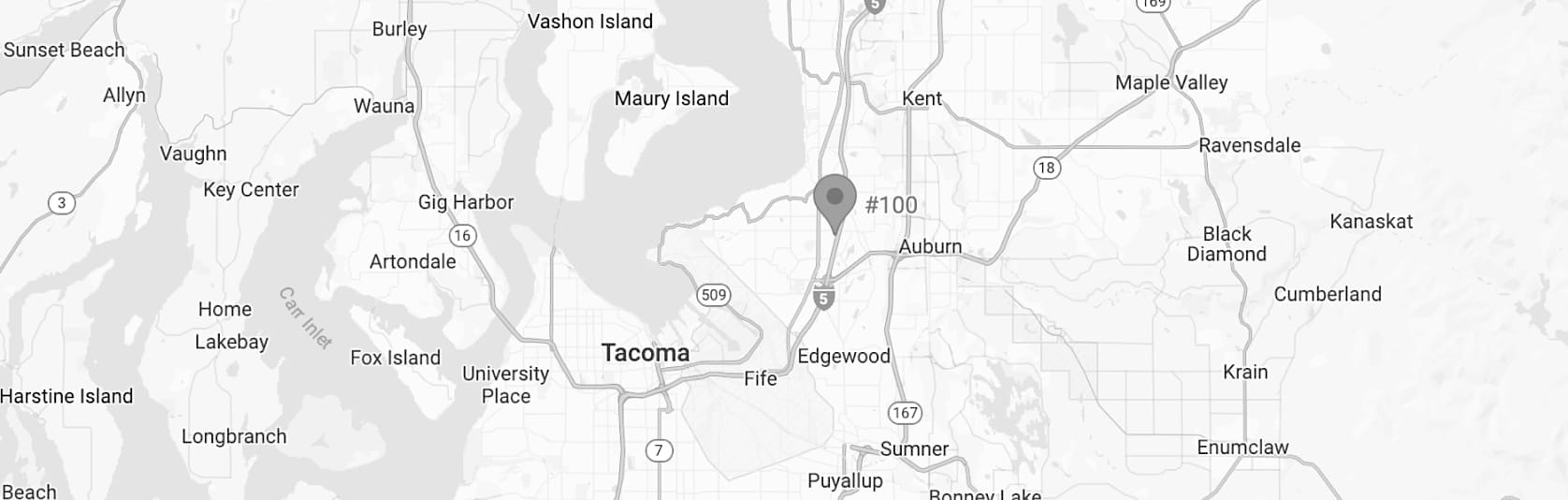
Park Chenaur Injury Lawyers serves the full corridor from offices in Tacoma and Federal Way, with attorneys admitted across King and Pierce Counties and client services in English, Spanish, Korean, Russian, and Vietnamese. You can review outcomes on our case results page.
Frequently Asked Questions
Do I need a lawyer for a Highway 18 crash, or can I handle the insurance myself?
You can talk to the insurer yourself, but SR 18 crossover crashes are rarely simple. They often involve serious injuries, commercial trucks with multiple insurance layers, disputes over who crossed the center line, and sometimes a roadway-defect angle against the State. A lawyer preserves evidence before it disappears and counters the comparative-fault arguments adjusters use to reduce offers.
How long do I have to file a lawsuit after an SR 18 crash?
In most Washington personal injury cases, you have three years from the crash date under RCW 4.16.080. If the State of Washington may be liable for a roadway defect, you must also file a tort claim form first and wait 60 days before suing, so your effective deadline to act is sooner. Talk to a lawyer well before the three-year mark.
Can I sue the State of Washington if a road defect on SR 18 caused my crash?
Yes, in the right case. Washington allows tort claims against the State, but you must first file a claim with the Office of Risk Management under RCW 4.92.100 and then wait 60 calendar days under RCW 4.92.110 before filing suit. The limitations period is paused during that 60-day window. Because WSDOT has publicly documented SR 18 as a high-collision corridor awaiting a median barrier, roadway design is worth investigating in serious crossover cases.
What if I was partly at fault for the Highway 18 collision?
You can still recover. Washington uses pure comparative negligence under RCW 4.22.005, so your damages are reduced by your percentage of fault but never eliminated. If you are found 30 percent at fault, you still recover 70 percent of your damages. Insurers exaggerate plaintiff fault to lower offers, which is why crash evidence matters.
A truck was involved in my SR 18 crash. Does that change the case?
Often, yes. SR 18 is a major freight connector, and trucking companies can be liable for their driver and for negligent hiring, training, maintenance, and hours-of-service violations. Interstate carriers must follow Federal Motor Carrier Safety Administration rules, which frequently define the standard of care. Truck cases also carry larger insurance limits, which matters when injuries are severe.
Is SR 18 being fixed, and does that affect my claim?
WSDOT has widened the I-90 end of SR 18 to four lanes with a permanent center barrier and a new diverging diamond interchange, finishing in 2026, and has a separate roughly $665.9 million project to widen and add a median barrier over Tiger Mountain that is not scheduled to start until around 2030. So large stretches remain undivided. The fact that WSDOT identified the corridor as dangerous and planned a barrier can support a roadway-design argument in crashes that happened before the fix.
What kinds of injuries are common in Highway 18 crossover crashes?
Head-on and crossover impacts at highway speed tend to cause severe injuries: traumatic brain injuries, spinal cord injuries, multiple fractures, internal injuries, and fatalities. SR 18 has a documented history of fatal head-on crashes near the Tiger Mountain summit. These high-severity cases make full investigation and adequate insurance coverage especially important.
How much does it cost to hire Park Chenaur for an SR 18 case?
We handle personal injury cases on a contingency fee, meaning you pay no attorney fee unless we recover compensation for you. The initial consultation is free. You can contact us to have your SR 18 crash reviewed at no cost.
Disclaimer: Past results do not guarantee future outcomes. Every case is different and must be evaluated on its own facts. The information on this page is for general educational purposes only and does not create an attorney-client relationship. Statutes and case law are current as of the date of publication; verify before relying.