An Everett crosswalk crash is rarely just a question of who had the light. Washington law gives pedestrians and bicyclists strong protection in marked and unmarked crosswalks, but it does not erase every fault argument. The driver may argue you stepped out too late, crossed outside the crosswalk, ignored a signal, or shared blame. The insurance company may also move fast to get a recorded statement before nearby video is gone.
This guide explains how Washington crosswalk law works after an Everett pedestrian accident, what the City’s own red-light camera data says about crash corridors like Evergreen Way, Broadway, Rucker Avenue, Casino Road, and Everett Mall Way, and what evidence matters in the first days after a crash.
The Short Version
-
Drivers must stop for people in crosswalks. RCW 46.61.235 requires an approaching driver to “stop and remain stopped” for a pedestrian or bicycle in a marked or unmarked crosswalk when that person is on or within one lane of the half of the road the driver is using.
-
That protection is not automatic in every fact pattern. The same statute says a pedestrian or bicyclist may not suddenly leave a curb or other place of safety and move into a vehicle’s path when the vehicle is so close that stopping is impossible.
-
Fault can be split. Under RCW 4.22.005, contributory fault reduces damages in proportion to the person’s share of fault, but it does not bar recovery.
-
Everett has a local camera-corridor story worth knowing. At six red-light camera intersections named in Everett’s February 4, 2026 traffic-camera presentation, the City reported 192 total crashes and 46 injury crashes across 2023 and 2024. That is 24.0 percent, or almost one in four. This is a narrow intersection-set figure, not a citywide crash rate.
-
Video disappears faster than claims do. Store cameras, traffic-camera records, police traffic collision reports, witness names, signal timing, damaged clothing, and medical records matter more than the words you use on day one.
Everett’s Crosswalk Problem Is Local
Everett is not a generic pedestrian accident market. The streets people actually name after a serious crash are local: Evergreen Way, Broadway, Rucker Avenue, Casino Road, 112th Street SW, 4th Avenue W, and Everett Mall Way. Those corridors carry shoppers, bus riders, school traffic, workers, and drivers moving between I-5, the Boeing and Paine Field area, the mall district, and the neighborhoods east and west of Evergreen.
That is why the City’s own 2026 traffic-camera presentation matters. On February 4, 2026, Everett’s City Traffic Engineer, Corey Hert, presented the City’s automated traffic safety camera update to the Community Health and Safety Committee. The presentation named six red-light camera locations:
| Intersection | Camera approaches listed by the City |
| Broadway at 16th Street | Northbound and southbound Broadway |
| Rucker Avenue at 41st Street | Northbound and southbound Rucker |
| 112th Street SW at Evergreen Way | Eastbound 112th Street SW |
| Evergreen Way at Casino Road | Northbound Evergreen and eastbound Casino |
| 4th Avenue W at Evergreen Way | Northbound 4th Avenue W |
| Everett Mall Way at 7th Avenue SE | Southwestbound Everett Mall Way |
The same presentation included crash-history tables pulled from MS2 data imported from WSDOT’s Police Traffic Collision Report database. For 2023 and 2024, those six intersections show:
| Intersection | 2023 total | 2023 injury | 2024 total | 2024 injury | 2023-2024 injury share |
| 16th Street and Broadway | 14 | 4 | 12 | 7 | 42.3% |
| 41st Street and Rucker Avenue | 10 | 4 | 11 | 1 | 23.8% |
| Casino Road and Evergreen Way | 21 | 3 | 22 | 5 | 18.6% |
| 112th Street SW and Evergreen Way | 19 | 5 | 28 | 4 | 19.1% |
| 4th Avenue W and Evergreen Way | 19 | 6 | 14 | 0 | 18.2% |
| 7th Avenue SE and Everett Mall Way | 11 | 3 | 11 | 4 | 31.8% |
Add those rows together and the picture is simple. These six camera intersections had 192 total reported crashes and 46 injury crashes in 2023 and 2024. That is 24.0 percent. Through September 2025, the same tables showed 42 crashes and 9 injury crashes, with the City’s presentation projecting 56 total crashes by year-end.
That does not prove what happened in any one crash. It does not mean every crash at those intersections involved a pedestrian. It does mean these are not imaginary danger spots. The City is already treating them as enforcement corridors, and the crash history gives injured walkers and bicyclists a more precise way to ask for records.
If you were hit near one of those intersections, the first evidence question is not just “who had the light?” It is also: what camera, store, bus, vehicle, city, or police record existed before anyone had time to lose it?
What Washington Crosswalk Law Actually Says
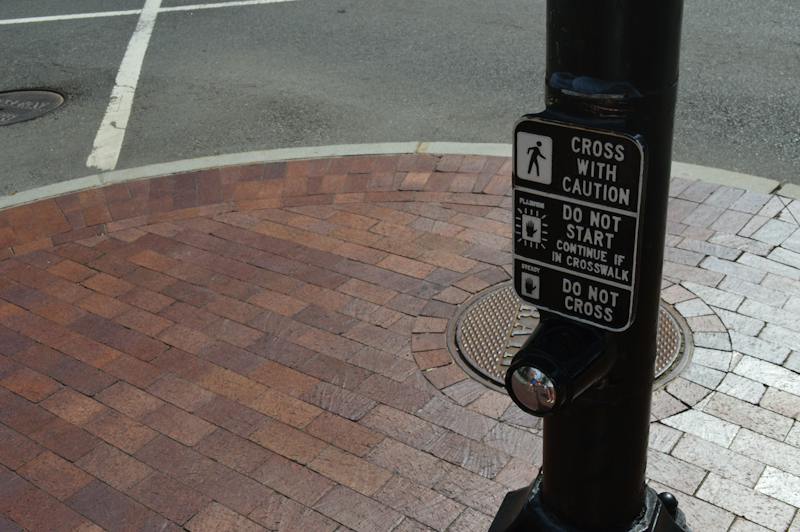
Washington’s crosswalk rule lives in RCW 46.61.235. The driver rule is strong. An approaching driver must stop and stay stopped for a pedestrian, bicycle, or personal delivery device in a marked or unmarked crosswalk when that person is on, or within one lane of, the half of the road the driver is traveling on or turning onto.
That “unmarked” word matters. Many people think a crosswalk only exists when paint exists. Washington law does not work that way. At many intersections, the legal crosswalk exists even when the city has not painted zebra stripes or parallel lines. A painted crosswalk helps with visibility and proof. It is not the only source of the right.
The statute also carries three limits that insurance adjusters focus on:
-
A pedestrian or bicyclist may not suddenly leave a curb or other safe place into a vehicle’s path when the driver is so close that stopping is impossible.
-
The driver rule does not apply in the circumstances covered by RCW 46.61.240, which covers crossing outside a marked crosswalk or outside an unmarked crosswalk at an intersection.
-
A driver approaching from behind another vehicle stopped at a marked or unmarked crosswalk may not pass that stopped vehicle.
Add RCW 46.61.245, and the driver’s duty gets broader. Washington drivers must exercise due care to avoid colliding with any pedestrian on a roadway and must take proper precautions when they observe a child or an obviously confused or incapacitated person.
The practical rule is this: being in a crosswalk helps a lot, but the case still turns on facts. Where you entered, what signal displayed, how far the vehicle was, whether sight lines were blocked, whether another vehicle had already stopped, whether the driver was turning, and whether video confirms the timing all matter.
Crosswalk Does Not Mean No Fault Argument
Washington law favors a person who is lawfully in a crosswalk, but it does not make every crosswalk case automatic. That is why recorded statements are dangerous. The adjuster is not only asking what happened. The adjuster is listening for sentences that turn a driver-duty case into a shared-fault case.
The defense questions usually sound harmless:
-
“Did you see the car before stepping off the curb?”
-
“Were you wearing dark clothing?”
-
“Were you on your phone?”
-
“Were you in the marked lines?”
-
“Did the countdown timer already start?”
-
“Could you have waited?”
-
“Did you make eye contact?”
Some of those facts matter. Some are distractions. The point is not to hide facts. The point is to anchor the facts before memory, pressure, and adjuster framing distort them.
Washington’s comparative-fault statute, RCW 4.22.005, says contributory fault “diminishes proportionately” the damages, but “does not bar recovery.” In plain English, a partly at-fault pedestrian can still recover. The percentage matters because it changes the number, not because it ends the claim.
RCW 5.40.050 adds another nuance. Most statutory violations in Washington are evidence of negligence, not automatic negligence per se. That means the law is powerful evidence, but a full liability analysis still looks at the whole event.
Washington case law says the same thing in real-world terms. In Van Cleve v. Betts, a driver turning left hit a pedestrian who entered on a walk signal. The Court of Appeals stated that failing to yield to a pedestrian lawfully in a crosswalk is negligence as a matter of law if the pedestrian was “seen or should have been seen” by the driver. The court also rejected an overbroad rule that a pedestrian who contacts the side of a car is always negligent. The facts still decide whether the pedestrian breached any duty.
In Pudmaroff v. Allen, the Washington Supreme Court dealt with a bicyclist using a crosswalk. The court continued the rule that bicyclists are treated “akin to pedestrians” when they use crosswalks to cross a roadway in the same manner as a pedestrian. That matters in Everett because many serious crashes happen at intersections where people are walking bikes, riding through crossings, or moving between trail, sidewalk, bus stop, and roadway space.
If You Were Crossing Outside the Crosswalk
Outside-the-crosswalk cases are harder, not hopeless. RCW 46.61.240 says a pedestrian crossing outside a marked crosswalk, or outside an unmarked crosswalk at an intersection, must yield the right-of-way to vehicles on the road. It also says that between adjacent signalized intersections, pedestrians must cross only in a marked crosswalk.
That gives the insurance company an obvious fault argument. It does not give the driver permission to stop paying attention. RCW 46.61.245 still requires drivers to exercise due care to avoid colliding with pedestrians. Speed, distraction, intoxication, sight lines, lighting, weather, road design, and whether the driver had time to react still matter.
Here is the difference:
| Fact pattern | Likely liability fight |
| You were in a marked crosswalk with a walk signal | Driver lookout, turn timing, speed, signal phase, and whether the driver should have seen you |
| You were in an unmarked crosswalk at an intersection | Whether the legal crosswalk existed, whether you entered safely, and whether the driver had time to stop |
| You crossed outside a crosswalk | Comparative fault, driver speed/lookout, visibility, lighting, roadway design, and reaction time |
| Another car had stopped for you and a second car passed it | RCW 46.61.235(4), driver impatience, lane position, video, and witness statements |
| You were riding a bike through the crossing | Whether you used the crosswalk like a pedestrian, plus the timing and visibility facts |
Do not assume your case is dead because you were outside paint. Also do not assume the driver has no defense because you were inside paint. The law sets the frame. Evidence decides the fight.
What Evidence Matters Most in Everett
The best evidence in a pedestrian accident is often temporary. A lawsuit deadline may be measured in years, but video may be measured in days.
1. Police traffic collision report
Everett Police and other responding agencies document the scene, statements, diagram, weather, lighting, and citations. If the crash involved serious injury, the investigation may include more than the standard exchange report. Get the report, but do not treat it as the whole case. Police reports are useful, not final. Officers rarely have every camera angle or medical record when they write the first version.
2. Camera footage
At the six red-light camera intersections named by the City, ask early about camera records. Also look beyond city cameras. Nearby grocery stores, gas stations, pharmacies, apartment buildings, buses, dashcams, doorbell cameras, and commercial trucks may all have footage. Businesses overwrite video quickly. Preservation letters should go out early.
The same is true outside the named camera intersections. If you were hit near Everett Mall Way, Evergreen Way, Broadway, Colby, Rucker, Casino Road, or a school crossing, assume there may be private video within sight of the crash.
3. Signal timing and phasing
A pedestrian case can turn on whether the driver turned across an active walk signal, entered on yellow or red, ignored a no-turn restriction, or crossed after a lead pedestrian interval. The signal timing plan, maintenance history, and any recent complaints can matter. This is especially important where a driver says, “I never saw them,” because the question becomes whether the street design put walkers in an expected path.
4. Lighting, weather, and sight lines
Everett’s darker months create predictable defense arguments. Adjusters focus on clothing, rain, glare, and visibility. Those facts should be documented, but they cut both ways. Poor visibility can also make speed, lookout, and turning care more important. Photos should capture the driver’s approach, the pedestrian’s approach, street lighting, lane count, parked cars, signs, bus stops, and anything that blocked either person’s view.
5. Medical records from the first visit
Go to urgent care, the emergency room, or your regular doctor as soon as you can. Tell providers every body part that hurts. Pedestrian crashes often produce head injuries, shoulder injuries, hip injuries, spinal symptoms, knee trauma, and delayed pain. Insurance companies use gaps in treatment to argue the crash did not cause the injury. A clean first medical record is evidence.
If you are not sure what to say to an adjuster, read our guide on what not to tell the insurance company after an accident before you give a recorded statement.
PIP, Health Insurance, and Who Pays the Bills
Many Everett pedestrian accident clients are shocked by the first hospital bill. The driver may be responsible, but the liability insurer usually does not pay medical bills one by one while the case is pending. That is why payment sources matter from the beginning.
Personal injury protection, or PIP, can apply to pedestrians. RCW 48.22.005 defines an insured to include a pedestrian accidentally struck by the insured automobile. RCW 48.22.085 requires insurers issuing new or renewal auto policies in Washington to offer PIP as optional coverage, though the named insured may reject it in writing. RCW 48.22.095 sets the minimum PIP benefits an insurer must offer, including $10,000 in medical and hospital benefits.
That does not mean every crash has PIP available. The driver may have rejected it. Your own household policy may matter. A family member’s policy may matter. The vehicle may be commercial. Health insurance may pay first and later assert reimbursement rights. Medicare, Medicaid, VA benefits, and ERISA plans can each change the cleanup work at settlement.
The short answer is this: do not wait for the at-fault driver’s adjuster to volunteer the payment stack. Ask for every possible source early. Our broader guide on medical bills after an accident explains how the pieces fit together, and our post on PIP coverage for injured pedestrians goes deeper on that specific issue.
Minimum Insurance Is Often Not Enough
Washington requires drivers to carry proof of financial responsibility. RCW 46.30.020 points to the minimum liability limits in RCW 46.29.090: $25,000 for bodily injury or death to one person, $50,000 for bodily injury or death to two or more people, and $10,000 for property damage.
Those numbers are small in a pedestrian case. An ambulance, emergency imaging, surgery consult, physical therapy, missed work, and future care can outgrow $25,000 quickly. That is why uninsured and underinsured motorist coverage, PIP, commercial coverage, employer policies, vehicle owner coverage, and road-design claims all need to be checked before settlement.
The most expensive mistake is treating the first policy limit offer as the whole available recovery. Sometimes it is. Often it is only the first layer.
What If the Road Design or Signal Played a Role?
Most crosswalk cases start with driver conduct. Some also involve public records. If a signal phase was broken, a sight line was blocked by public design, a marked crossing was placed where drivers could not see pedestrians in time, or prior complaints identified the same hazard, a public-entity question may exist.
That is a different path with extra procedural rules. RCW 4.96.020 applies to claims against local governmental entities and requires a claim to be presented before a lawsuit. No lawsuit subject to that section may be started until 60 calendar days have passed after the claim is presented, and the limitations period is tolled during that 60-day period.
That does not mean every Everett pedestrian crash is a city claim. Most are not. It means you should not wait until the end of the statute of limitations to ask the question. If the roadway itself is part of the case, early investigation matters because public-record requests, claim forms, repair logs, signal timing, and prior complaint history take time.
How Long Do You Have?
For most Washington injury claims, RCW 4.16.080 gives you three years to file a lawsuit for injury to the person or rights of another. That is the general outside lawsuit deadline.
Do not let that three-year rule make you slow. Several important deadlines are much shorter in practice:
-
Video may be overwritten in days or weeks.
-
Witnesses become harder to find.
-
Vehicles get repaired or sold.
-
Clothing, shoes, helmets, phones, and bicycles get thrown away.
-
PIP and health insurance deadlines may depend on policy language.
-
Claims involving a city, county, or other public entity can require a pre-suit claim and a 60-day wait under RCW 4.96.020.
The safest move is to preserve evidence before anyone starts arguing about fault.
What Park Chenaur Looks for in an Everett Crosswalk Case
Every case starts with three tracks: liability, coverage, and damages.
Liability means proving what happened. That includes the police report, photos, video, witness statements, signal timing, driver conduct, speed, sight lines, and whether the pedestrian or bicyclist was in a marked or unmarked crosswalk. In a turning-vehicle case, the path of the vehicle matters as much as the path of the walker.
Coverage means finding every available payment source. The at-fault driver’s liability limits are only one piece. PIP, underinsured motorist coverage, commercial policies, vehicle owner coverage, employer policies, and public-entity claims may all matter. This step is especially important when injuries are serious enough to need surgery, long rehabilitation, or time away from work.
Damages means documenting the full harm. Pedestrian crashes do not behave like low-speed fender benders. A human body takes the force directly. Concussions, fractures, torn ligaments, spinal injuries, shoulder injuries, nerve symptoms, scars, PTSD, missed work, and permanent limits all need to be tracked from the beginning. If your injuries changed your job, caregiving, sleep, mobility, or daily routine, those facts belong in the case.
If you were hit while walking or biking in Everett, start with our Everett pedestrian injury lawyer page for the claim overview. If a vehicle crash is the main issue, our Everett car accident lawyer page covers the broader auto claim. If the crash involved a bicycle, see our Everett bicycle accident lawyer page. You can also reach the Everett office directly.
Schedule Your Free Consultation. Call Park Chenaur Injury Lawyers at 253-INJURED (253-766-5574), reach our Everett office at 425-399-5986, or contact us online. Consultations are free and we handle these cases on a contingency fee, which means no fee unless we recover for you.
Frequently Asked Questions
Is the driver always at fault if I was in a crosswalk in Everett?
No. A crosswalk gives you strong legal protection, but the facts still matter. RCW 46.61.235 requires drivers to stop for pedestrians and bicycles in marked and unmarked crosswalks, but it also bars suddenly leaving a curb when the vehicle is too close to stop.
What is an unmarked crosswalk in Washington?
An unmarked crosswalk is the legal crossing area at many intersections even when no painted lines appear on the road. Paint helps drivers see the crossing and helps prove where you were. It is not the only thing that can create crosswalk protection under Washington law.
What if I crossed outside a crosswalk?
Crossing outside a crosswalk gives the insurer a stronger comparative-fault argument. It does not automatically end the claim. Drivers still owe a due-care duty under RCW 46.61.245, and Washington comparative fault reduces damages by percentage rather than barring recovery.
Does Washington crosswalk law protect bicyclists?
Yes, when the cyclist uses the crosswalk in the same manner as a pedestrian. In Pudmaroff v. Allen, the Washington Supreme Court continued the rule that bicyclists are treated like pedestrians for crosswalk protection when they use a crosswalk to cross a roadway.
Can PIP cover an Everett pedestrian accident?
It can. RCW 48.22.005 includes a pedestrian accidentally struck by an insured automobile within the definition of an insured for PIP purposes. PIP is optional in Washington, so the next question is whether available auto policies included it or rejected it in writing.
How long do I have to file a pedestrian accident lawsuit in Washington?
Most Washington personal injury lawsuits must be filed within three years under RCW 4.16.080. Do not wait that long to investigate. Camera footage, witness information, vehicle damage, insurance notices, and possible public-entity claim steps can all move on much shorter timelines.
What if an Everett traffic signal or roadway design contributed to the crash?
A public-entity claim may need to be evaluated if signal timing, maintenance, sight lines, crosswalk placement, or prior complaints contributed. RCW 4.96.020 requires a pre-suit claim and 60-day waiting period for many local-government tort claims, so this issue should be checked early.
Should I give the driver’s insurance company a recorded statement?
Not before you understand the fault and coverage issues. Adjusters often ask questions that sound routine but aim at comparative fault, medical gaps, or policy defenses. You should report the claim, but get advice before giving a recorded statement about speed, visibility, timing, or injuries.
The Bottom Line
Everett’s serious pedestrian and bicycle cases turn on local facts: crosswalk status, signal timing, driver lookout, camera footage, sight lines, insurance coverage, and the medical record. Washington law gives crosswalk users real protection, and Everett’s own camera-corridor data shows why certain intersections keep coming up in safety conversations. But the strongest law in the world still needs evidence.
If you or someone you love was hit in an Everett crosswalk, do three things now. Get medical care. Preserve every record and camera source you can identify. Talk to a lawyer before the insurance company turns a driver-duty case into a shared-fault story.